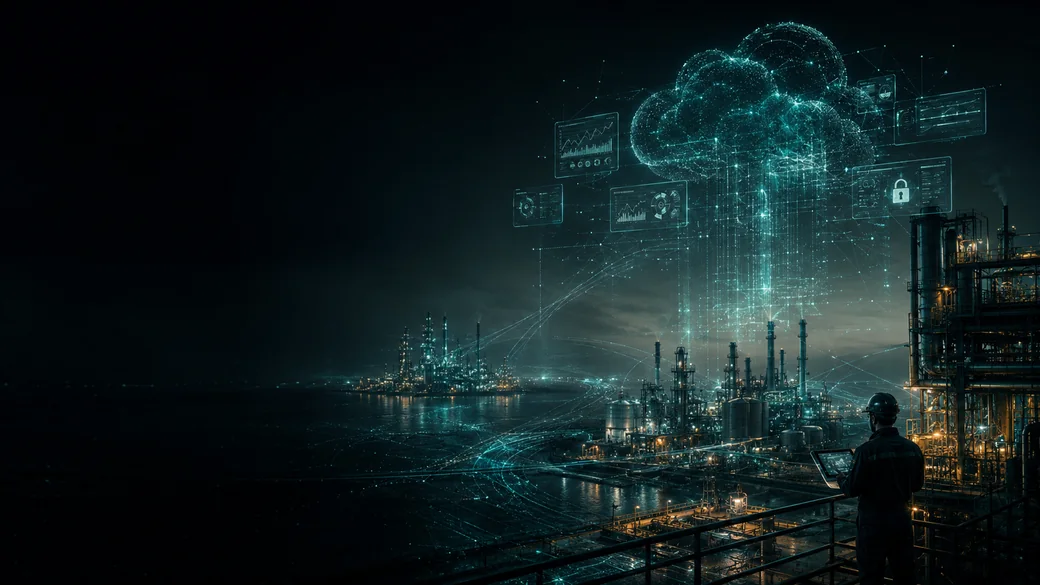
A Smarter Way to Understand and Improve Physical Systems
A Digital Twin is a digital representation of a physical asset, process, system, or facility. It brings together engineering models, operational data, simulation, and analytics to provide a clearer picture of how a real system behaves.
Unlike a conventional simulation that is usually created for a specific study, a Digital Twin can remain connected to the physical system and evolve with it. As new operating data becomes available, the model can be updated to reflect actual conditions. This makes it possible to monitor performance, study different scenarios, detect unusual behavior, and support better decisions throughout the lifecycle of a system.
We provide Digital Twin services for a wide range of industrial applications. Depending on the project, the solution may cover a single piece of equipment, a production line, an industrial process, a utility system, or an entire facility.
Our work starts with understanding the real system, the available data, and the problem that needs to be solved. We then develop a Digital Twin that fits the technical and operational requirements of the project.
Our services may include:
Engineering and physics-based modeling
Process and system simulation
Data-driven and hybrid modeling
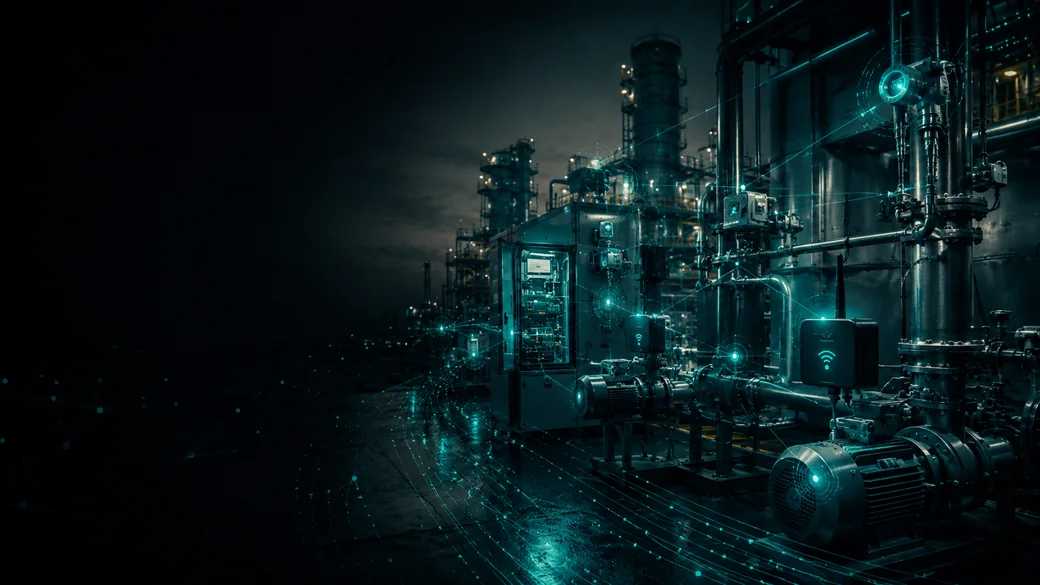
Connection to sensors and field devices
Integration with PLC, DCS, SCADA, Historian, and monitoring systems
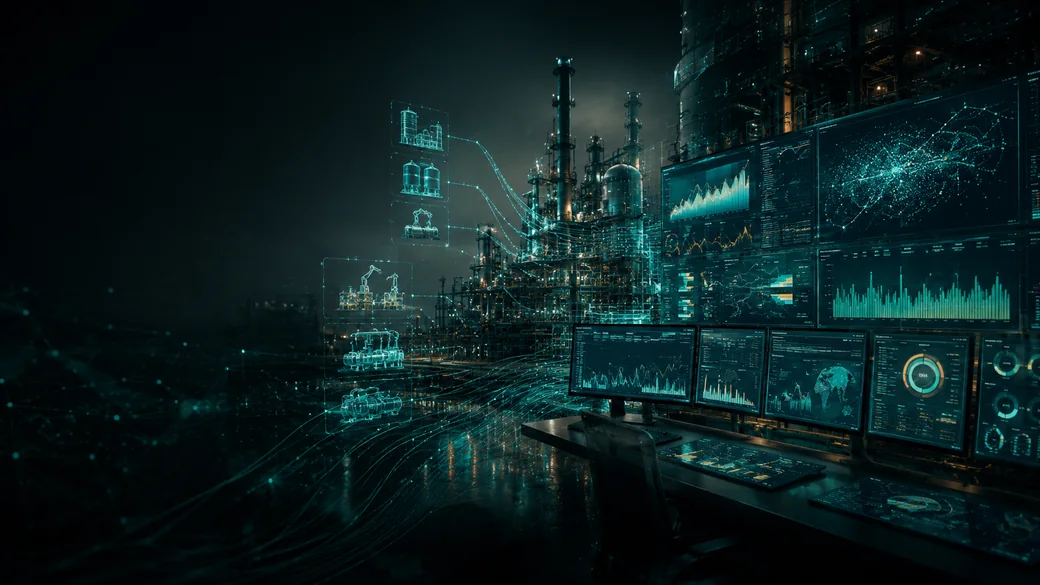
Real-time data collection and visualization
Performance and condition monitoring
Anomaly and fault detection
Predictive maintenance
Process and energy optimization
Virtual commissioning
Control-system testing
What-if scenario analysis
Artificial intelligence and machine-learning integration
Development of dashboards and decision-support tools
The purpose is not simply to display data. The goal is to turn operating data into useful engineering information that can support design, operation, maintenance, and future improvements.
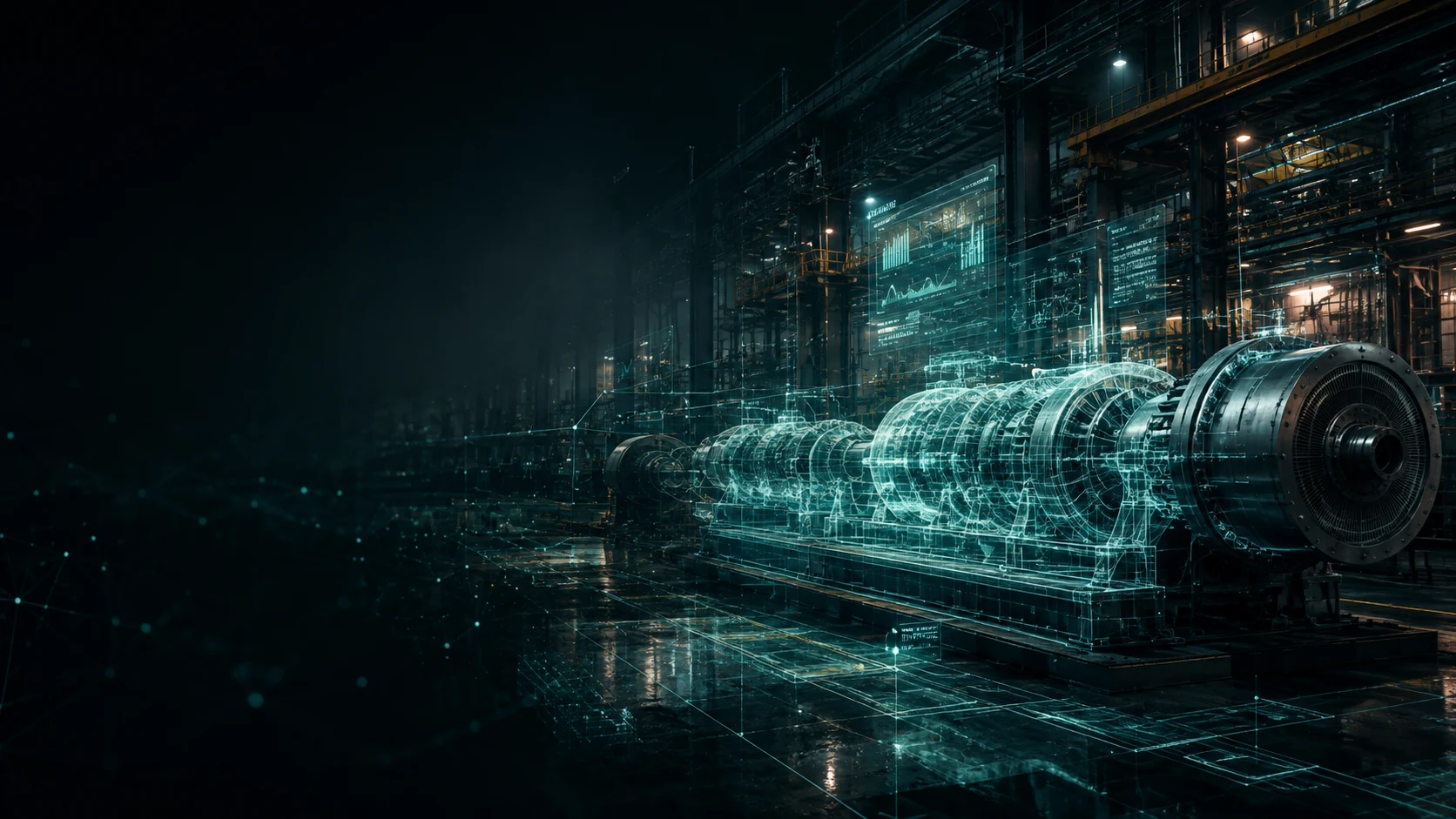
A physical industrial asset synchronized with its engineering model
02
Digital Twin services
The service scope is presented as a capability matrix rather than a single undifferentiated list.
Engineering and physics-based modeling
Process and system simulation
Data-driven and hybrid modeling
Connection to sensors and field devices
Integration with PLC, DCS, SCADA and monitoring systems
Real-time data collection and visualization
Performance and condition monitoring
Anomaly and fault detection
Predictive maintenance and optimization
Virtual commissioning and control-system testing
What-if scenario analysis
AI, machine learning and decision support
03
Different Levels of Digital Twin
A Digital Twin can be developed at different levels, depending on the size and complexity of the project.
Equipment Digital Twin
An equipment-level Digital Twin represents the behavior of a specific machine, component, or asset. It can be used to evaluate performance, monitor operating conditions, identify deviations, and study how the equipment responds to different loads or environmental conditions.
System Digital Twin
A system-level Digital Twin represents several connected assets and subsystems. It helps engineers understand the interaction between mechanical, electrical, control, and process elements and assess the overall behavior of the system.
Process Digital Twin
A process-level Digital Twin focuses on the flow of materials, energy, information, and control actions. It can be used to improve production, identify bottlenecks, reduce energy consumption, and evaluate alternative operating strategies.
Facility Digital Twin
A facility-level Digital Twin combines several systems, production units, utilities, and data sources within one digital environment. It provides a broader view of plant performance and supports centralized monitoring, planning, and decision-making.
04
Offline, Online, and Real-Time Solutions
Not every project needs the same level of connectivity. We develop Digital Twin solutions in offline, online, and real-time configurations.
Offline Digital Twin
An offline Digital Twin is developed using design documents, engineering calculations, historical records, and simulation models. It can be used for design studies, feasibility analysis, operator training, system evaluation, and testing different scenarios without affecting the real system.
Online Digital Twin
An online Digital Twin receives data from the physical system through sensors, PLCs, DCS platforms, SCADA systems, industrial networks, or databases. This allows the model to be updated regularly based on actual operating conditions.
Real-Time Digital Twin
A real-time Digital Twin runs alongside the physical system. It continuously receives field data, updates its calculations, tracks key indicators, and identifies changes or abnormal behavior as they occur.
The right solution depends on the project objectives, available infrastructure, data quality, required response time, and cybersecurity requirements.
Physics-based, data-driven and hybrid models in one engineering environment
05
Our Modeling Approach
Digital Twins can be built using different modeling methods.
Physics-based models use engineering principles and mathematical equations to describe how a system works. Depending on the application, these models may include mechanical, electrical, thermal, fluid, process, or control-system behavior.
Data-driven models use historical and real-time data to identify patterns and relationships within the system.
In many cases, the best result comes from combining both methods. A hybrid model uses engineering knowledge to define the basic behavior of the system and operational data to improve accuracy, calibration, and predictive capability.
We select the modeling approach based on the complexity of the system, the quality of available data, the required accuracy, and the intended use of the Digital Twin.
06
Integration with Existing Industrial Systems
A Digital Twin becomes more useful when it can work with the systems already available at the site. Our solutions can be connected to:
A Digital Twin becomes more useful when it can work with the systems already available at the site. Our solutions can be connected to:
Sensors and measurement systems
PLC and automation platforms
Distributed Control Systems
SCADA systems
Manufacturing Execution Systems
Industrial historians and databases
Condition-monitoring systems
IoT and Industrial IoT networks
Edge-computing platforms
Cloud-based infrastructure
Enterprise software systems
The solution can be deployed locally, at the edge, through a private network, or on a cloud platform.
Local deployment may be preferred where data security, response time, or network availability is critical. Cloud and remote solutions are useful for centralized monitoring, multi-site access, collaboration, scalable data processing, and advanced analytics.
07
How We Deliver a Digital Twin Project
Every project begins with a clear understanding of the physical system and the expected outcome.
Our typical workflow includes:
01
Reviewing the asset, process, or facility
02
Defining the main objectives of the project
03
Evaluating available data, instrumentation, and existing systems
04
Selecting the appropriate modeling approach
05
Developing the Digital Twin model
06
Connecting the model to data and control systems
07
Calibrating and validating the model
08
Developing dashboards and analytical tools
09
Testing and commissioning the solution
10
Improving and expanding the system over time
The final solution may include interactive models, real-time dashboards, performance indicators, anomaly-detection tools, simulation functions, maintenance insights, optimization features, and connections to other industrial platforms.
From Data to Better Decisions
Industrial systems already generate large amounts of data. The challenge is turning that data into something useful.
A Digital Twin provides a practical way to combine operational information with engineering knowledge. It helps organizations understand what is happening, why it is happening, and what may happen next.
By bringing together engineering, simulation, automation, industrial connectivity, data analytics, and artificial intelligence, we develop Digital Twin solutions that are built around the real needs of each project rather than a fixed, one-size-fits-all platform.
Related capabilities
Part of an integrated digital platform.
Move between the connected capabilities that make industrial data operationally useful.