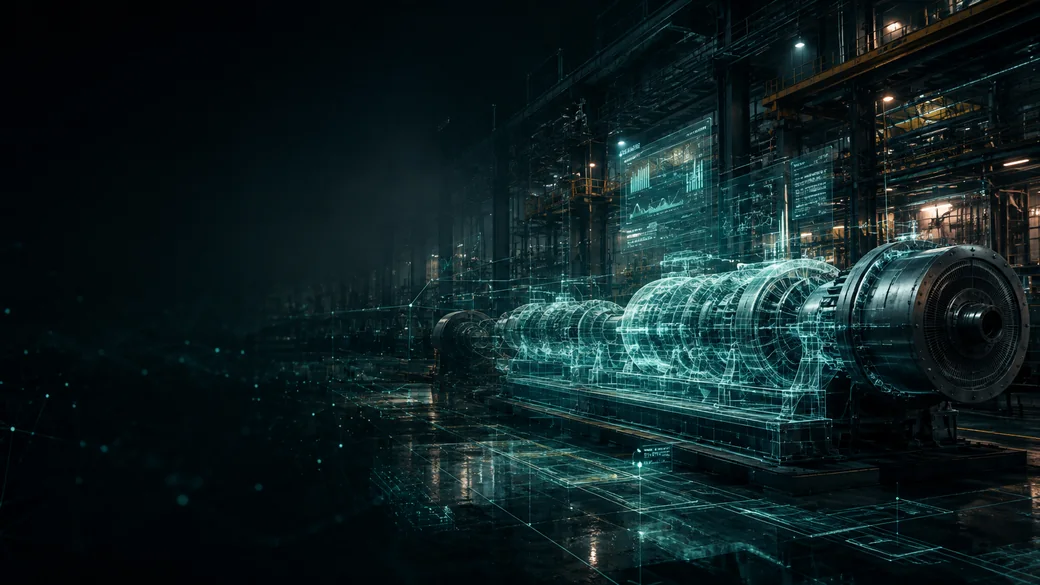
Local Deployment
Data and applications remain inside the industrial site. This approach is suitable where internet access is limited, response time is critical, or data confidentiality is important.
Digital Transformation capability
Connecting Industrial Assets, Systems, and Data
Industrial sites often rely on equipment, sensors, control systems, and software platforms that operate separately. IoT and Industrial IoT solutions connect these systems and make operational data available to the people and applications that need it.
We design and implement connected solutions that collect data from field devices, machines, PLCs, DCS and SCADA systems, transfer it securely, and make it available for monitoring, analysis, reporting, and decision-making.
Our approach is based on the existing industrial environment. Instead of replacing every system, we focus on connecting available equipment and infrastructure in a practical, secure, and scalable way.
Connecting equipment is only the first step. The real value comes from using the collected data to improve visibility, reliability, efficiency, and response time.
Our IoT and IIoT solutions help organizations monitor their operations in real time, access information remotely, detect abnormal conditions, reduce manual data collection, and make better use of their existing systems and data.
These solutions can also provide the foundation required for Digital Twin, predictive maintenance, advanced analytics, artificial intelligence, and other digital transformation applications.
Each service opens independently, keeping the page scannable without hiding the technical depth.
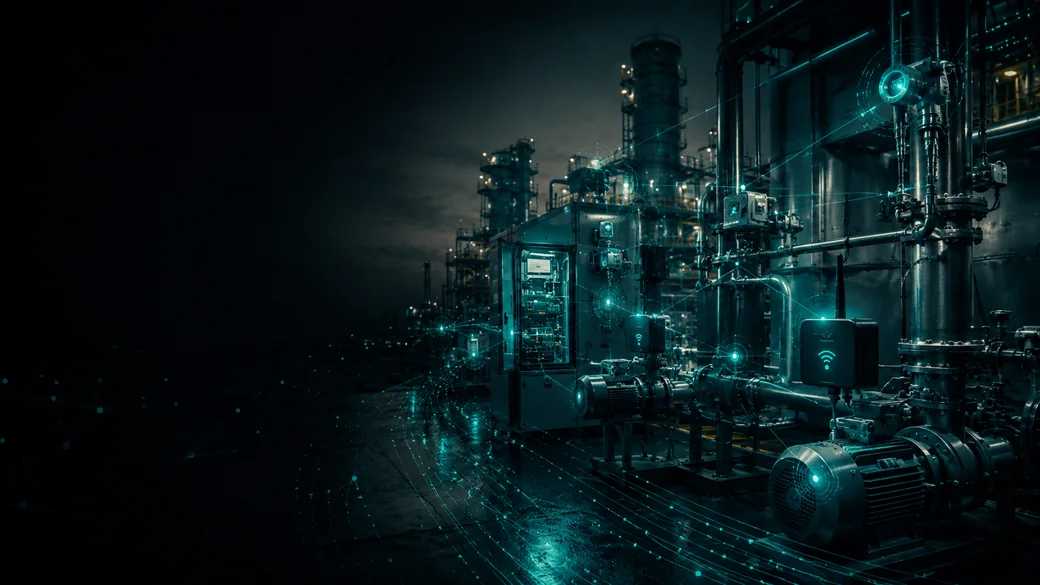
We connect sensors, instruments, machines, electrical equipment, and smart devices to monitoring and data-acquisition platforms.
Depending on the application, communication can be established through wired industrial networks, wireless technologies, existing automation infrastructure, or dedicated IoT gateways.
Our services may include sensor integration, machine data acquisition, remote I/O connectivity, wireless monitoring, equipment-status collection, environmental monitoring, and utility-data acquisition.
A large amount of valuable operational data already exists within PLCs, DCS platforms, SCADA systems, and local controllers.
We connect these systems to higher-level monitoring, database, reporting, and analytical platforms without interfering with their main control functions.
This allows process values, equipment status, alarms, events, and calculated parameters to be used for remote monitoring, performance analysis, reporting, and decision support.
Our solutions can be developed for both modern control platforms and older installations that still rely on legacy communication interfaces.
Industrial facilities often use systems from different manufacturers and different generations. These systems may rely on different communication protocols and may not be able to exchange data directly.
We provide communication and protocol-integration services to create a reliable flow of information between field equipment, controllers, gateways, databases, and software platforms.
Depending on project requirements, integration may include:
Where direct communication is not possible, industrial gateways or custom software interfaces can be used to connect the systems.
Not all industrial data needs to be transferred directly to a central server or cloud platform.
Edge devices and industrial gateways can collect, filter, process, and store data close to the equipment. This reduces network traffic, improves response time, and allows important functions to continue even when external communication is temporarily unavailable.
Edge solutions can be used for local data processing, protocol conversion, data normalization, temporary storage, alarm generation, local calculations, secure data transfer, and running analytical models close to the physical system.
We develop monitoring platforms that present industrial data in a clear and useful form.
Dashboards can display real-time values, operating trends, alarms, production indicators, equipment status, energy consumption, maintenance information, and customized key performance indicators.
Different access levels can be defined for operators, engineers, maintenance teams, managers, and customers.
Depending on the project, dashboards can be deployed on a local server, within the industrial site, through a private network, on an edge platform, in the cloud, or through a hybrid architecture.
When remote access, centralized monitoring, or long-term data storage is required, industrial data can be connected to database and cloud platforms.
We design solutions for secure data transfer, storage, visualization, reporting, and analysis. The architecture is selected according to data volume, required response time, internet availability, cybersecurity policies, and the number of connected sites.
Cloud and database connectivity can support:
Where cloud deployment is not suitable, the same functions can be implemented locally or through private infrastructure.
Data is collected from sensors, instruments, machines, PLCs, DCS systems, SCADA platforms, electrical equipment, and other operational sources.
The collected data is transferred through industrial controllers, communication modules, gateways, or dedicated data-acquisition devices.
The data is filtered, structured, processed, and stored locally, at the edge, on a central server, or in the cloud.
Authorized users receive operational information through dashboards, reports, notifications, alarms, and analytical tools.
This architecture can begin with a small monitoring application and later expand into a complete connected industrial platform.
IoT generally refers to connected devices that collect and exchange data through a network. These solutions are widely used in buildings, transportation, agriculture, energy systems, and commercial applications.
Industrial IoT applies the same concept to industrial environments, where reliability, cybersecurity, communication continuity, system availability, and integration with control and automation systems are much more important.
In an industrial environment, losing a connection may affect more than a dashboard. It can influence production visibility, maintenance decisions, energy management, and operational response.
For this reason, IIoT solutions must be designed around the actual technical and operational requirements of the site rather than treated as ordinary internet-connected applications.
There is no single architecture that is suitable for every project.
Data and applications remain inside the industrial site. This approach is suitable where internet access is limited, response time is critical, or data confidentiality is important.
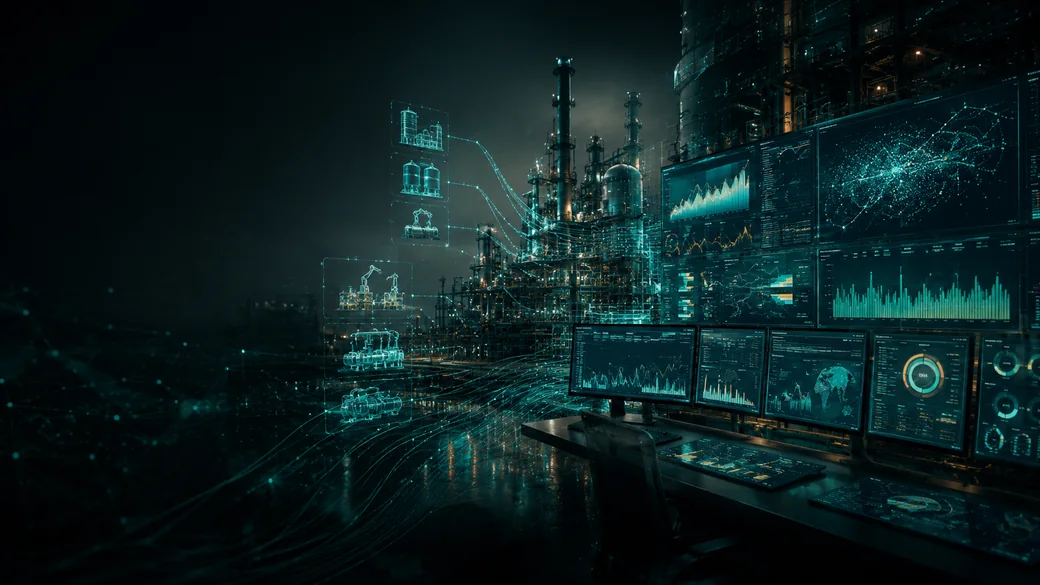
Data is processed close to the equipment, providing faster response and reducing dependence on external networks.
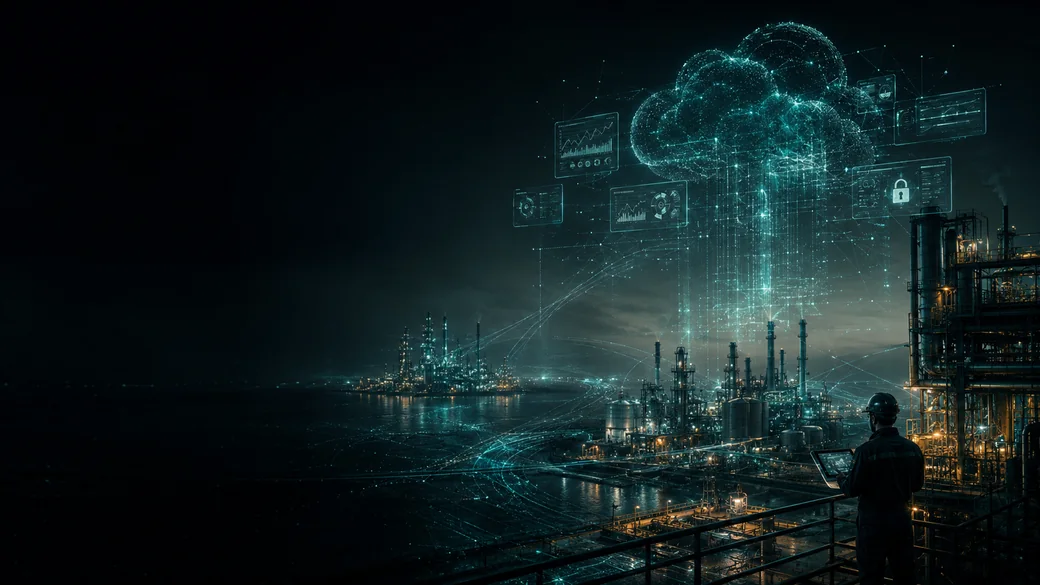
Selected data is transferred to a cloud environment for centralized access, scalable storage, remote monitoring, and advanced processing.
Critical functions remain local while selected information is transferred to remote or cloud platforms for monitoring, reporting, storage, or analysis.
We select the most suitable architecture based on the operational requirements, existing infrastructure, cybersecurity policies, data volume, and future development plan of the project.
Our IoT and IIoT solutions can be developed for a wide range of industries, including:
Typical applications include equipment monitoring, process monitoring, remote-site supervision, energy management, production-data collection, alarm reporting, condition monitoring, environmental monitoring, predictive maintenance, asset tracking, and multi-site performance comparison.
Industrial connectivity must be designed carefully. A connected solution should provide access to useful information without creating unnecessary risks for the control environment.
Depending on the project, our design approach may include:
The required security measures are defined according to the system architecture, site requirements, and importance of the connected assets.
Every IoT and IIoT project begins with an assessment of the existing site, available systems, communication infrastructure, and expected outputs.
Our typical workflow includes:
Reviewing the equipment, control systems, and available data
Defining project objectives, required outputs, and system users
Evaluating industrial networks and communication protocols
Selecting the required sensors, gateways, and software platforms
Designing the system architecture
Developing communication and data interfaces
Building dashboards, reports, notifications, and analytical tools
Testing the solution under actual operating conditions
Commissioning the system and training users
Providing technical support and future expansion
The solution can be delivered as a small standalone monitoring system or as part of a larger digital transformation platform.
Building a Connected Industrial Environment
A successful IoT or IIoT project should do more than connect devices. It should make industrial information easier to access, understand, and use.
By combining instrumentation, control systems, industrial communication, software development, databases, edge computing, and cloud technologies, we build connected solutions that fit the real requirements of each operation.
Our goal is to create a reliable digital link between the physical site and the people, systems, and applications that depend on its data.
Related capabilities
Move between the connected capabilities that make industrial data operationally useful.
IoT & IIoT
Start a conversation
Tell us about your project requirements, operational goals or engineering challenges.